Connection Doesn’t Happen by Accident
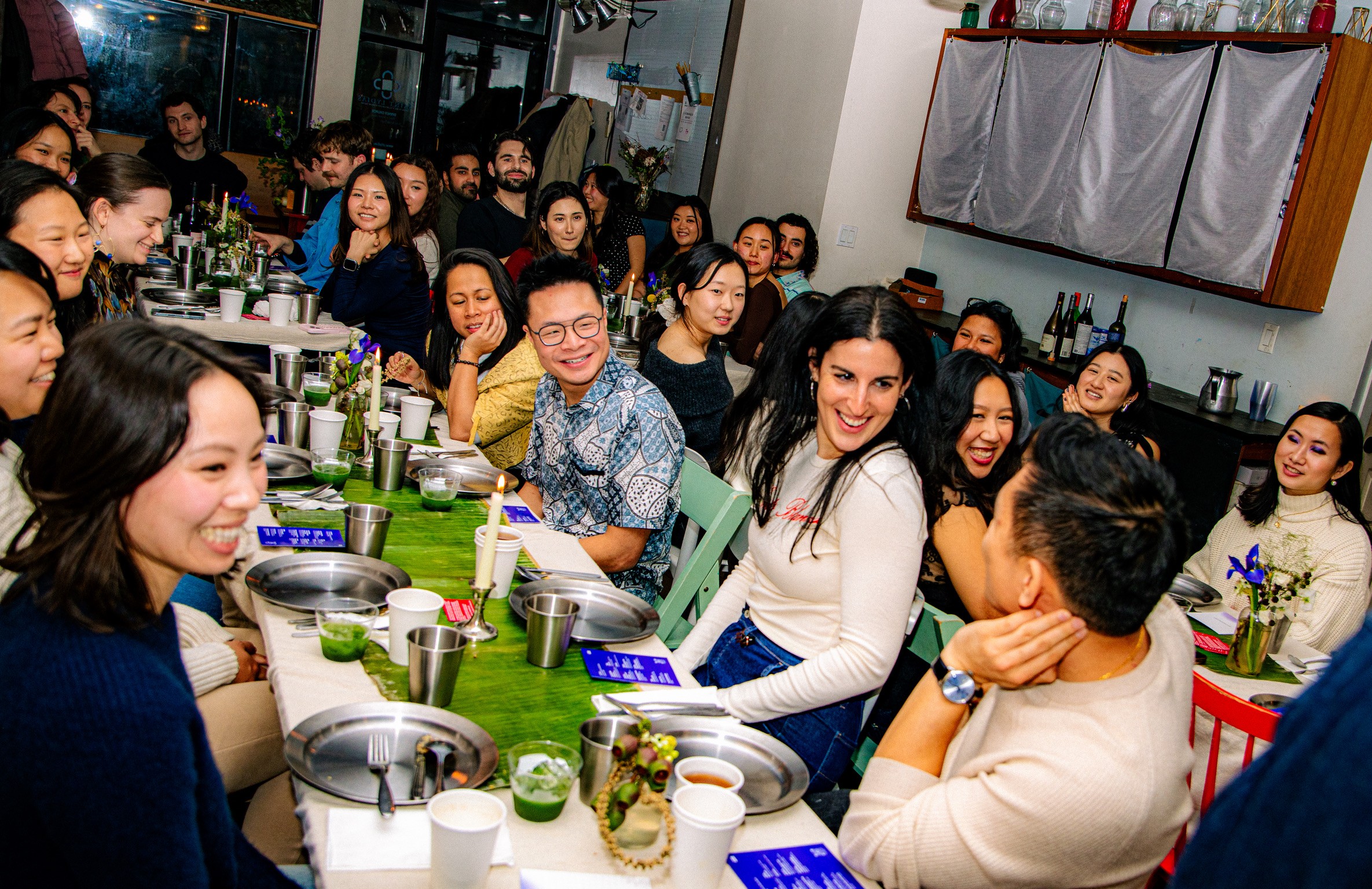
We live in a time of extraordinary convenience. We can order food in minutes, work without commuting, and stay in constant contact without ever being meaningfully with one another. But ease has not made us feel closer. It has made it easier to opt out of participation, easier to eat alone, easier to remain adjacent to people without truly knowing them.
That tradeoff is starting to show. In the United States, about one in two adults report experiencing loneliness. Fully remote workers report higher loneliness than their on-site peers. And roughly one in four American adults now eat all of their daily meals alone.
There are numerous researches conducted about the effect of loneliness (you guessed it, they’re all bad). So, when thinking about tackling this problem, creating another app-based “solution” does not seem to be enough for us.
Studio Bumi was created from a different premise: that connection does not happen accidentally. It has to be designed, hosted, and practiced. In a world optimized for efficiency, we believe people need spaces that ask a little more of them, not less. Something with more friction. A dinner checks all of these hypothesis. A shared table. A set time. A room full of people willing to participate. A structure that makes conversation easier, but never performative. A meal that gives people a reason to stay. If, again, the structure is right.
This is why Studio Bumi exists.
We are designing belonging through communal dining.
We use meals as the entry point, but the real work is relational. We create gatherings that help people move from presence to participation, from attendance to connection, from being in the room to actually being with one another.
Designing for
Relational Intelligence
We believe we are living through a moment when the ability to build trust, empathy, and meaningful relationships matters more than ever. As more of life becomes automated, transactional, and screen-mediated, the human skill of connecting well does not become less important. It becomes more essential. Yet most of the environments we move through every day are not designed to support that kind of connection. They are built for speed, convenience, and efficiency. Studio Bumi approaches this differently by creating spaces where people can slow down, participate, and practice being with one another in a more genuine way.
Our Approach
Our vision is ultimately infrastructural. We want to make communal eating normal again. Two generations ago, shared meals were built into everyday life. Today, they have to be intentionally created. Studio Bumi exists to rebuild that system. We think about this across three layers.
This is how belonging becomes repeatable.
From Guests to Hosts
What differentiates Studio Bumi is that we do not just host experiences. We design systems where former guests become hosts, facilitators, and co-creators. The experience grows beyond us while maintaining the same level of intentionality.
One of the things that matters most to us is that the experience does not end when a dinner is over. Over time, we want people who first arrive as guests to begin seeing themselves as contributors, facilitators, and future hosts. That shift is part of the larger vision. Rather than building a model that depends entirely on us to create every moment, we are interested in building systems that allow more people to learn how to gather others well. In that way, the work can grow outward while still carrying the same level of care, thoughtfulness, and intention that shaped it in the first place.
We are not just creating events. We are building a network of people who know how to gather others well.
Building Infrastructure
for Belonging
At its core, Studio Bumi wants to make communal eating feel normal again. Not as a novelty, and not as a once in a while experience, but as something people can return to and build into their lives.
If loneliness is partly a design problem, then our work is to design for belonging. We do this through repeatable meal rituals, community-powered hosting, emotional design, and a deliberately low-tech, high-touch approach that prioritizes presence over platforms.
Through public dinners, team experiences, and collaborative formats, Studio Bumi is creating new ways for people to gather with intention.
What we are building is not just a series of events. It is infrastructure for belonging.